Sunday, August 30, 2020

Making a White Board Desk!

 New school - new things.  Just wanted to post a video about how to make old desks into white board desks.  

My plan is to have all students working bell-to-bell in my classroom - right on their desks.


Tuesday, April 7, 2020

COVID19 - High School Math Assigment - Project 2 - Puzzles!!

So I keep looking for different things to do during this time of change... Projects that can be read by email and done without internet (or sometimes I mail the page).

This is a project for 9-12 grade, Algebra, Geometry and Algebra 2.  

Here is what I email the students (allowing 2-3 weeks):

To: Students:

Hello gang!

I hope everyone is well.  I want to intro the new project for this week!

I like math puzzles!! 
So I want us to solve one and create one!  

Step 1 - solve the following!!  (Taken from Facebook)   If you can get me an answer - if you struggle send me your thoughts on it.....
​

Step 2  -- Create your own Social Media post-able math puzzle (so I should be able to snap a picture without your name like above)
This can be on paper,  on Microsoft word, on google doc....  Whatever medium you would like to use!  You most likely will need to start with a rough draft, then make a final copy!!

It can be like the one above (if you do a lock like the one above please do 4 digits instead of 3, which would take more steps to solve).  You could also do a lock like your gym locker, or anything you want to try. 

I will comment how it goes!! 

Friday, April 3, 2020

2020 - No more High School Math Homrwork (for my students)

HS Math classes don't (necessary) need homework....

About 3 years ago I migrated to no outside of class math practice (no homework).  And after some bumps have had success and student's continued to grow.  For me and my students a real positive!  Had presented about it a few times at conferences.....
This post really deserves to be better, but instead I am posting about what happened next.....

A parent contact the Channel 3000 local news about my teaching without assigning homework in HS math courses (Algebra, Geometry, Algebra 2 and Pre-Calculus).   They wanted to do an interview and good PR for the school is always welcomed.

They came down and did a 3 minute segment and article. - here.

But then it really caught fire, had a Smart-brief wtih ASCD about it - here
then, probably received 80 emails about how....

And finally an NEAtoday article - here

Rethinking Homework: Best Practices That Support Diverse Needs, 2nd edition

by Cathy A. Vatterott  - here  
(My Hitchhikers Guide to No Homework - yes 42....)
My goal for this post is to simply connect these for any teacher considering changing.  There are always naysayers, but I run on data and while HW for HS math is good - I skip good for great....

I am always open to discuss -   It can be done and I know my students are better because of it!

Wednesday, April 1, 2020

Things to do in COVID19 for math that are not rote

So as this school year finishes online the challenge for all of us is huge.  I have decided that the rote practice of worksheets or an online practice program are not what I want my students to remember.  So we will practice here and there (short sprints to maintain skills) but instead will spend more of our work time on open ended projects.  Some will be hits and others failures --

This is the email for my first:  (For Algebra, Geometry, Algebra 2 & Senior Math)

Subject: Decision Matrix   Sent 3-30

Gang, 
So we are going to alternate between videos/IXL/OMS (Other Math Stuff) and projects!  

This week is a project!!!

The first project I want you to do is create a decision matrix to select the best option from a list of choices.

To do this project you will need a question that needs answering between solutions (you pick the question and tell me - we will work together on this project).

Examples (and you can use these questions if you like)
1) Select the best Overwatch Character 
2) The best group of properties to have in Monopoly.
3) The best cell phone (Samsung-Android, Apple, Trace)
4) Best car brand
5) Best candy bar
6) Best soda
7)  Best Superhero (see start of my list below, I like a spreadsheet for this but pick what you want)
8) ANY QUESTION!!!   You can pick.

So here is the timeline of deliverables:
By April 1st - email me your question/list/idea and research what a decision matrix is!
By April 3rd - email me your factors and scoring system
By April 7th - Rough Draft of matrix (paper or excel or sand-tablet)
By April 9th - A final decision using a matrix!

I picked this because decision matrices are used all the time in the world.

It is a good skill   (and continue your IXL stuff, I will email more on April 2nd or 3rd).

Thanks all
SA

Start of Mr. A's Best Superhero Decision Matrix!
image.png
Probably should add 'School Appropriate column" since it is a tie.

I am sharing this in case it helps someone.  You will also see lots of time to do, students have enough happening - I also mailed this to some students....

If it helps great -- this is what I am doing... (for the moment)

Monday, February 18, 2019

There in no teacher shortage...

As myself many of colleagues approach retirement (thus meaning old), I worry about the profession.  I worry about teachers, students and the overall trend.  We continually hear about there not being enough teachers.  Today I read an interesting article "There Is No Teacher Shortage" and if you take the time to read it - I agree with it.

1) It is simply supply and demand - what schools want: great people at rock bottom prices is not achievable.  Especially when the teaching profession has gone from highly respected to... well... what it is today.  And it used to be a job where you would put in a career and your retirement was there - it was not great but it was consistent.  And that too - it least in Wisconsin is gone.

2) So states lower standards so more people can be teachers - and eventually that will have an effect.   In my opinion it will start in urban and rural areas because they have less resources - teacher cuts, teachers will move to the suburban schools... And the spiral will begin.

So the question becomes what now - will we react prior to the bottom or not.  And it really comes down to one thing:  Those brave people who become teachers should be able to have a middle class living after a short period of time and right now that is not the case.

Eventually this gap between job requirements and pay can only result in one thing - the standards equaling the pay.  Meaning if it is not treated importantly, financially, it will become a second class job and our students will reap that prize.

If students are number one - the teaching career should be paid like it.

Thursday, January 31, 2019

A different PLC... Programmable Logic Controllers - in Geometry!!


We have started working on Mechatronics at our school in our Intro to Engineering/Problem Solving Course.  Thanks to an NSF grant, Maryland Design, and our local tech school - BTC.  I was able to train last summer in Florida, and then my boss took the leap and we purchased the trainer below - only $567.  And then our local tech school, BTC took the leap to start a dual enrollment path and reimbursed our school for the trainer.  Below are our first two videos for 


Next is working thru the curriculum for the trainer - but you notice the difference - get it first - use it and then figure out the details!! The experience for the students has been great - even if we struggled with the path occasionally.

And the really important next big step is to have every math student do a bit of programming!! Most likely in Geometry - tied to logic and proofs (which we don't do much of).  I think a bit of programming like this really develops a students "if-then" thinking!
But is starts with willingness to say there are better things to do than we been doing....  A tough statement.

My plan is to have videos up of Geometry students doing some programming by May!

Monday, January 28, 2019

Back to blogging, finding reflection time....

Lately I have found myself is a funk.  And while I put my best foot forward everyday this funk is holding back my ability to let things roll off - meaning - things are annoying me lately.  And in education that can take a toll.  And I think it has a correlation to my reduced blogging time.

While I have not blogged much in the last year - I still have been doing reflection, just thru other sources - PLCs and twitter mainly - but I think that finding time to blog, time to have the thoughts flow thru my fingers is a necessity for me.   For me it prioritizes where my energy goes, what I am thinking about and what should be next.

So in the next few weeks I plan to write about the following things:

1) No homework in HS Math -- I have not assigned any homework in my classrooms this year.  I assign projects - but daily practice we are handling differently - mostly bell-to-bell, coupled with retest and requiz as some students take more time.

2) Infinite requizzing - why it works and why you don't have to worry about "what will happen in college."

3) Our school just went to one-to-one (as of last week) in our HS, how should I utilize this in my math room?

4) Engineering in HS, how to get students problem solving....  Not worrying acout curriculum but finding opportunities.

For me, it is simply time that needs to be taken....


Friday, August 24, 2018

Homework for Math does it really work? Why do we do it?

If you have taught math, we accept that we must think and practice math to be proficient.  And I agree completely - but why is homework the best way to do that?  Especially pencil and paper homework?

When I trained workers in the world - I did not show them for 40 minutes then turn them loose.  And they did not go home and study it outside of their day....

Yet that is often math education today.  I am really reflecting on why...

Is it truly equitable???

So often - it is just the way it has always been done...  I think that where homework fails - it was needed when schools were sorting students for college - now all are college/career ready....

With that in mind I am starting my second year of no math homework - topics for review, access to online review but no homework for all.

Last year it worked....   Started it the end of the first semester.  Our spring results were up slightly - so it was not an immediate negative.

And on the positive side much more class time has opened up to work, attitudes improved because students who struggled are not being asked to work away from class....

Thus I remember this quote:

        "Bravery is not the absence of fear but the forging ahead despite being afraid"    
         Robert Liparulo

 And push on....


Sunday, September 24, 2017

Math & School & Life --- Help Students Avoid Negativity


Article written for School Newsletter:

Math & School & Life
Help Students Avoid Negativity

Student:  “I hate school; math is just too hard.  I can’t ever get it.”

Parent:  “Don’t worry about it; I never understood math either.”

This is an example of an all too common exchange with students and adults.  Now if you have heard about my math classes I often admit that the exact skill we are learning is not going to appear in some sort of “Real-Life” test - but I also quickly point out the skills of learning, processing and problem-solving are the skills we need, and math class is where we practice!  

These “Habits of Mind” are at the heart of creating resilient, lifelong learners who can attack problems in the world and workplace - but it starts with changing the exchange about tough subjects, tough days and tough events!   

Everyone can be successful in school and life, it is simply persistence!  We simply need for students to continually strive to do their best!  So try rephrase the above interaction:

“I hate school; math is just too hard.  I can’t get it.”

“Just keep working.  Everyone just learns at differents speeds.  You’ll get it, it just takes a bit more work and that’s okay.”

OR

“I hate school! Mr. Anderson just goes too fast during class!.”

“Just keep working.  Just talk with him maybe before school or during a study hall.”

OR

“I hate school, it is just too _____”

“Just keep working. Just talk with your teacher - I am sure there is way to go forward.”


We - parents, teachers and community members - are all creating young adults ready for our world.  The great thing for a student is we give multiple chances, an opportunity to stumble, show persistence, then succeed.  We only need to encourage them not to give up!  Help them keep their fire burning for learning and participating.  And keep encouraging our students to have empathy for others, too!

I am extremely excited to have the students back September 5th!

Sunday, August 27, 2017

Thinking about why.... Learning Myths

Why do we do what we do in the classroom?  How much is based on data versus administration expectation, parent expectation and our own past experiences as students?

I like to think of myself as a non-typical teacher who really is reflective on my practices - and when I took this short quiz on Wisconsin Public Radio's site on learning myths I expected not to be too surprised.  Yet I missed two of the seven questions.  What I thought was fact - wasn't....

Which leads to a great reflection point - even after 12 years in the classroom it is so important to pause and reflect.  To think about why we do what we do based on true data - not perceived data.  Is what we are doing really helping students, or is it just part of other's expectations of teaching or our own experiences?

Lots of questions.  Those questions need reflection - that is what makes us and schools better.  Reflection is still the most important thing I do when thinking about curriculum and students. 

Finally - it is not one size fits all; every teacher must find their own answer.

Sunday, May 7, 2017

Fear of failure cannot stop us...

Just had a great couple of days at the Wisconsin Math Conference last Thursday and Friday (#wismath17).  I was able to present and get ideas from other math professionals (and computer science).

And I love this conference - I heard someone say "these are the people who drink the Kool-Aid"  and that is definitely true.  These are the professionals who ask for the PD time, prep the speeches and put themselves out there with their peers!

Yet....     Often we hear a ton of good stuff but it becomes so hard to implement...
time, administration, testing requirements, fear of moving backwards....
Where our only question should be "Is this best for students for actually learning math (not tests or college readiness, or state report cards).

I have almost always moved on good ideas and adjusted as I go.  I commit to changing a minimum of 10% of my practices (sometimes I try and go-back)  But if you don't try you are stagnate.
And I believe you cannot plan perfect transitions and by trying to, you end up not moving - your practices don't improve.  And that is worse than moving with some errors - I am willing to try/fail/revise/try/fail/revise.... to improvement.  And it works - we must remember that 2% improvement per year leads to great gains in just a few short years.

That said so many of us want all the steps and answers and I believe that over-analyzing slows us all down to no movement.  Many teachers ask about how I decided to move to a retake system and a homework system which uses no class time.  How did I get my admin on board?  (Did not ask) What plans did you do ahead? (Just started and fixed as I went) Etc.  I did not plan them completely - I just kept making small truly new adjustments - then one day a new system was there.

I definitely make mistakes - but my overall trend is 2% positive - which is best for my students.   I want my peers to know that the path is not straight or without pot-holes...  but we must walk the path.


Tuesday, May 2, 2017

Thursday, January 26, 2017

Rural Schools hoping for State's help

Had a Channel 3000 news crew come to Juda today.  They stopped in my Calculus class, it is part of the news because of talks at Madison about how to fund rural schools. 

Here is a link:

Channel 3000 Report

Saturday, October 1, 2016

STEM - Measurement Olympics

Juda has been part of the I^2 STEM summer institute at UW-Platteville the past 2 years; its goal is to have more STEM in schools which couples extremely well for my desire for large hands-on projects.  So I wanted to post about the Measurement Olympics I ran in my Intro to Engineering Class this semester and encourage other teachers to use it (motivation came from the institute and our school's Olympic theme this year).

Instead of homework I am trying to issue challenges this year.  I am pushing students to be persistent and solve difficult problems - really trying to focus on Habits of Mind.

I created a short youtube video about the events (so that my judges could know see first hand what the students were doing  - also here is a link to the materials)


It went great.  The students were divided into teams and estimate, calculated and worked hard on solving these problems - it ended with them presenting their results to panel of judges.  It went well and taught a lot of the real world skills we want in students.  Plus first prize was cool (see facebook post).....


Friday, July 29, 2016

Grow Rural Education Winner!!

Happy to announce that our STEM initiative at Juda receive a $10,000 grant to expand our robotic equipment used within our STEM program for all 6-12 grade students.  Monsanto Grow Rural Education funded the school project (2 years now - 2015 and 2016).

The STEM program is done during homeroom time through-out the year as ungraded part of our curriculum to help develop and practice 21st Century skills like persistence, flexible thinking, problem solving and team work.  It is key part of our visions to create life long learners.

Habits of Mind are quickly becoming the skills that separate people in the work place.  I am excited because this grant helps Juda continue on its vision of changing the school culture from one problem-one solution mindset to a growth mindset - one where students attack problems with multiple solutions and refine thru multiple revisions.  Like the world the students are entering.

Watch for updates!

Friday, July 15, 2016

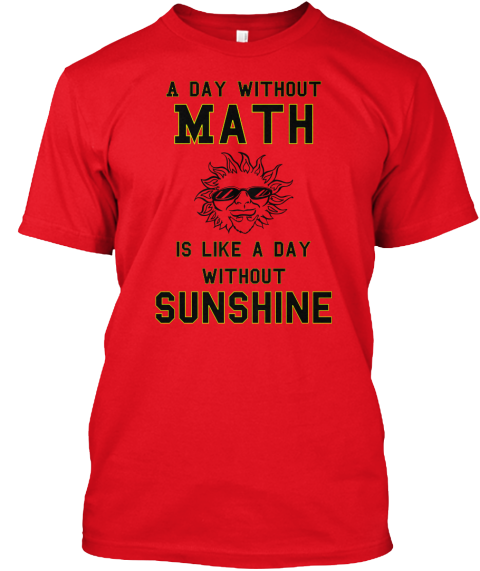
Raising funds & Getting a cool math shirt......

Trying to find funds is always a challenge.  To help support our math team I already ask local businesses to sponsor the team and put their logos on the back of our shirt each year (levels of sponsorship include Nerd level & Uber-Nerd level).  But as the team has expanded to 50% of the HS and MS - it keeps requiring more funds.

And I refuse to let the math team be exclusive - it is inclusive.
I also refuse to sell pizzas or candles, etc.  Cause it does not have a good return for the time required.

Now I am trying teespring.  Here is our first shirt:

A Day Without


Is Like A Day
Without 
 Math Sunshine Red T-Shirt Front

Link to order

I will have to update in a few weeks if it worked (or did I at least get enough orders to get the one I order printed).

Sunday, June 12, 2016

Good versus Great - Making tough decisions.....

Had my great friend (thanks Mary!) send me an article on how good teachers become great.  I am always looking for the great activities, the best, and those are done at the expense of good things.  Knowing what not to do, I believe, is as important as knowing what to do -- because there simply are not enough minutes.

I found the post great because it started talked about perfect lesson plans, bulletin boards and binders.  The title said great teaching - and that is my goal - and I don't do any of that.  Ugh!  It was talking about all the things I skip to put time on authentic tasks that make students ready for what lays beyond my walls.  But then just about when I was ready to scream - it pivoted about how students need opportunities - authentic tasks.  And how much of the good teacher tasks must be skipped to be great (whew...) ---  saying: "In fact, becoming a great teacher requires that much of the good teacher code be broken." 

Think of all the things that can suck time -- Having perfect lessons, or the best hall passes or having all the right forms and binders prepared....    Heck those are things I often make the office ask for twice (cause a lot of stuff they ask for they just file, and most of the time - they ask once and not again).  Doing TPS things just takes more time than it is worth.  Uhhh...yeeahh...

Making things happen takes time but I think great teaching is letting students go (it was the number 1 thing in the article) - and that does not take as much time.  But I think that is hard for us as teachers.  Control can seem like a precious commodity, but in the end it is in the student's best interest to put them in control.  And success is nice but a lot more can be learned in failure and revision (for us teachers too).  

And the results are undeniable once you put students in control.  For years I have assigned projects using ideas and software that I have not done.  I think I could - but I am after end results, students can figure out details to create things (assigning a 3D house in Google Sketch Up is the largest project - I can barely draw a prism in Sketch Up). 

I plan to focus my upcoming reflections on how important minutes are in my classroom.  Not just for me and my time, but more importantly, my students time.


Monday, May 9, 2016

WMC Conference 2016 Reflections

Attended the Wisconsin Math Council (WMC) conference in Green Lake Wisconsin again this year, and another great conference.  A Gathering of a slew of dedicated math instructors from Kindergarden to College.  Peers presenting, keynotes presenting - just a lot of math discussions and thoughts.

For me personally it is a tremendous reflection time and I picked up some great ideas to use and share on ratios from Gail Burrill from Michigan State and division of fractions writing in a context from Natalia Bailey from Edgewood college/UW.   There was an intriguing session on standards base grading by Jeff Harding (even if he is from Illinois).  And UW-River Falls showed tidbits and I found some activities that will help my students with reasoning and justification.  All things that will make me a better teacher, all things that I would not have located on my own (most likely).  Things that make the conference very worth while - yet that is not the biggest return on my time at the conference (or my school district’s money).

There are 2 things I always find are huge at the conference for me professionally - 1) is presenting on my classroom (that is always scary - presenting in front of peers);  and 2) the reflections, peer discussions and time to think deeply about my practices.

I presented on recursive review and improvement that has resulted in our school’s ACT data - and that is always good for me.  It makes me think about the blend of necessary skills that my students need to be successful in math - while really reflecting on how to make sure my room is being driven from conceptual understanding with many opportunities for practice in problem solving and persistence (problem solving with many answers requiring justification).

The single most important thing that makes me go again and again is how the time, enviroment and presenters make me really think about my practices and how I approach the classroom.  What my goal for my teaching is, what my students will do - what I really need to lead them through so they are successful beyond my high school’s walls.  

And my number one take away is…..   

Wait…  

Picking one can always be something that gets a lot of “attention,” but this would be my number one - I am sure everyone’s is not the same. So a bit of a disclaimer: knowing how we teach is super important - that we are leading students to understanding, not memorization but from memory, that we would not worry about just the test but most importantly how they problem solve and analyze for their times beyond education institutions (and yet make sure they have the skills not to be unsuccessful in post-HS mathematics - meaning that the ACT and placement tests matter).  So with all that said, for me, the number one take away this year is:

Minutes matter.

I will modifiy many lessons because of this conference, and add things here and there.  But for me the number one thing is treating my 44 minutes period like the precious commodity it is.  That from bell to bell we are doing math - solving problems, mixing in review.  That the students are pushed and are working a combination of problems that review and stretch.  

It is so important that I am commiting to myself and 12 of you that read this blog that I am going to submit a presentation about it next year for the WMC (including some of more non typical things - like no HW grading or HW questions is class)   (Side-note: my wife does not believe there is 12 of you)

So there it all is - a great conference - already cannot wait for next year.  And I will do my best to make every minute count......

Sunday, March 6, 2016

Not in the curriculum, a phrase to be uttered rarely....

What is my mission?  What do I want students to be able to do and understand mathematically once they leave HS?  Those are questions I ask each week before I sit down to plan - the global question before what I want them to be able to do with a specific skill. 

I know that I want all my students to be ready for college and career -- but what does that really look like?  Once you get beyond that truly basic premise of "math ready"  what do we want?  I want innovative, problem solving students who don't accept the world around them without through questioning it!  Students who engage, attempt, FAIL, revise and retry.   I want projects that require that - and when they appear I have to remind myself to grab them - otherwise I get worried about what they may miss.

When is the last time an average adult had to factor a second order polynomial, or use the quadratic formula?  I know some jobs do....  But I was an engineer for 12 years prior to teaching and only a few times did I need specific higher level math, but what I did do was problem solving, data analysis, experimentation and logic thinking.  It was trying and FAILING, revising and retrying.  The skills that higher level math requires (when we keep the cost of errors low and let students do the work) - so math prepares us for those challenges!

Yet as a teacher it is easy to get caught in teaching all the things - all the details.  My tact has changed dramatically over the past decade - number one college bound students must place into college mathematics period (no remedial), and then second students must practice the soft skills of the math practices.  Teaching the focus of a parabola is not important, likewise matrix operations - the important part is the soft skills it takes to understand.  Now full-disclosure I only teach focus for a single day in Pre-Calculus and matrix operations in Pre-Calculus only - why?  Because unless you are on a STEM path those things, while good, are not as good as doing other soft projects.

Schools have the tendency not to make leaders, or challengers of the status quo but the opposite.  That is why a big part of my year is built around projects where I require the students to work with limited information, to learn skills that I do not show - I was reading Poke the Box by Seth Godin and he talked about how schools actually drive-out kids drive to initiate. 

And I agree our schools are still based on a sorting system - rule followers are rewarded, and - well - in most rooms vice versa.  The world is not orderly and does take turns - those that push hardest while maintaining ethics get there first and get the spoils.  We need to encourage free thinkers, get all students to be disobedient enough to be innovative - scary -  but we need students to question us (my favor joke now is don't trust me, verify me). 

Students must engage, try, fail and revise - but as any teacher will tell you, often students don't try unless they know the way to the solution.  That is not preparing them.  That is because they have to be taught on how to engage and revise; they need to hear that the wrong answer is not the end, just a step.  Rarely do my students get the math in the assigned projects correct, but if they support their position and do well they all get 100%!  If they don't support their position - they revise - then they get a 100%!   We work together, I model, they revise - not engaging is not an option.

As leaders we must embrace our roll to change what teaching looks like - and the first step is not to utter - it is not in the curriculum.  If it teaches soft skills - it is more important than half the math we teach - so grab it.

Wednesday, February 24, 2016

Juda STEM Day - 2015-16 Robot Mazes

Wanted to share our STEM video, really proud of what we are doing at Juda!


Moving away from graded projects can be scary, but it worth it!